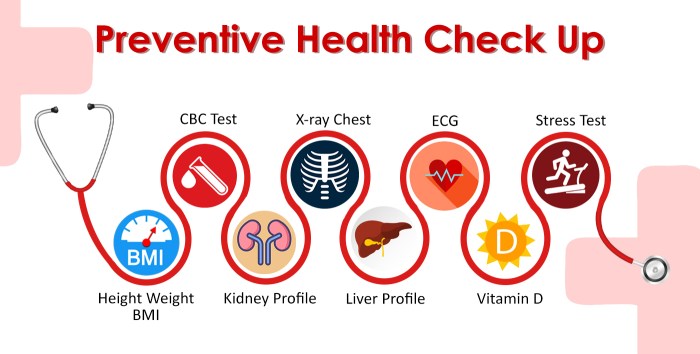
Embark on a journey through the world of preventive health checkups, exploring their significance, types, benefits, and much more in a comprehensive yet engaging manner.
Learn about the various aspects of preventive health checkups and how they play a crucial role in maintaining overall well-being and early detection of health issues.
Importance of Preventive Health Checkups

Regular preventive health checkups play a crucial role in maintaining overall well-being and preventing potential health issues. These checkups are essential for early detection of health problems, allowing for timely intervention and treatment. By monitoring key health indicators and conducting routine screenings, individuals can proactively manage their health and reduce the risk of developing serious conditions.
Early Detection of Health Issues
- Preventive health checkups enable healthcare providers to identify health issues at an early stage when they are more treatable.
- Early detection of conditions such as high blood pressure, diabetes, or cancer can significantly improve treatment outcomes and overall prognosis.
- Regular screenings for conditions based on age, gender, and lifestyle factors can help individuals take preventive measures and make informed decisions about their health.
Maintaining Overall Well-being
- Preventive health checkups promote a proactive approach to health management, emphasizing prevention rather than reactive treatment.
- By monitoring key health parameters, individuals can track their progress, set health goals, and make lifestyle adjustments to improve their overall well-being.
- Regular checkups also provide an opportunity for healthcare providers to offer guidance on nutrition, exercise, and other preventive measures to support optimal health.
Types of Preventive Health Checkups
Regular preventive health checkups play a crucial role in maintaining overall well-being by detecting potential health issues early on. There are various types of preventive health checkups available, each tailored to different age groups and risk factors.
1. Basic Preventive Health Checkup
- Blood pressure measurement
- Blood tests for cholesterol levels
- Blood sugar tests
- Body mass index (BMI) calculation
2. Comprehensive Preventive Health Checkup
- Complete blood count (CBC)
- Lipid profile test
- Liver function tests
- Kidney function tests
- Thyroid function tests
- Electrocardiogram (ECG)
3. Specialized Preventive Health Checkup
- Cancer screening tests (such as mammograms, Pap smears, and colonoscopies)
- Bone density tests
- Prostate-specific antigen (PSA) test for men
- Gynecological examinations for women
4. Executive Preventive Health Checkup
- Advanced cardiac tests (such as stress tests and echocardiograms)
- Pulmonary function tests
- Advanced imaging scans (such as MRI or CT scans)
- Detailed consultation with specialists
When comparing different preventive health checkup packages offered by healthcare providers, it is essential to consider the comprehensiveness of tests included, the expertise of healthcare professionals conducting the screenings, the convenience of scheduling appointments, and the overall cost-effectiveness of the package. Choose a preventive health checkup that best suits your age, gender, family medical history, and lifestyle to proactively manage your health.
Benefits of Preventive Health Checkups
Regular preventive health checkups offer numerous advantages for individuals, helping them maintain good health and detect any potential issues early on. These checkups can ultimately save lives and prevent serious health conditions from developing or worsening.
Early Detection and Prevention
- Preventive health checkups can help in early detection of health problems such as high blood pressure, diabetes, and cholesterol levels.
- Early detection allows for timely intervention and treatment, preventing the progression of diseases.
Improved Quality of Life
- By identifying health issues early, preventive health checkups can lead to better management of conditions and improved overall well-being.
- Regular screenings can help individuals adopt healthier lifestyle choices and habits.
Cost-effectiveness
- Preventive health checkups are more cost-effective in the long run compared to treating advanced illnesses.
- Early detection and prevention can help reduce healthcare costs associated with managing chronic conditions.
Role of Prescription Drugs in Preventive Medicine
Prescription drugs play a crucial role in preventive medicine by helping individuals manage risk factors, prevent diseases, and maintain overall health. These medications are prescribed based on individual health assessments and medical history to reduce the likelihood of developing certain conditions.
Common Prescription Drugs for Preventive Purposes
- Statins: These drugs are commonly prescribed to lower cholesterol levels and reduce the risk of heart disease and stroke.
- Antihypertensives: Medications to control high blood pressure and prevent complications such as heart attacks, strokes, and kidney disease.
- Aspirin: Often recommended for its blood-thinning properties to prevent blood clots and reduce the risk of heart attacks and strokes.
- Vaccines: Prescription vaccines are essential for preventing infectious diseases such as influenza, pneumonia, and human papillomavirus (HPV).
Importance of Adherence to Prescribed Medications
Adherence to prescribed medications is crucial in preventive healthcare to ensure the effectiveness of treatment and reduce the risk of complications. Skipping doses or not following the prescribed regimen can lead to suboptimal outcomes and increase the likelihood of disease progression. It is essential for individuals to understand the importance of taking medications as directed by healthcare providers to reap the full benefits of preventive treatment.
Integration of Preventive Health Checkups in Primary Care
Preventive health checkups play a crucial role in primary care settings as they focus on early detection and prevention of diseases, ultimately leading to better health outcomes for patients. Primary care physicians are at the forefront of promoting preventive healthcare by integrating regular checkups into their practice.
Collaborative Approach between Primary Care Physicians and Specialists
In promoting preventive healthcare, primary care physicians often collaborate with specialists to ensure comprehensive care for their patients. Specialists provide expertise in specific areas of health, allowing for a more thorough evaluation and personalized preventive strategies tailored to each individual’s needs.
Role of Primary Care Providers in Patient Education
Primary care providers serve as educators for their patients, emphasizing the importance of preventive health checkups in maintaining overall well-being. They inform patients about the benefits of early detection, lifestyle modifications, and regular screenings to prevent the onset of chronic conditions. By engaging in open communication and fostering a trusting relationship, primary care physicians empower patients to take charge of their health through preventive measures.
Public Health Initiatives for Promoting Preventive Health Checkups
Public health initiatives play a vital role in promoting preventive health checkups by raising awareness, implementing policies, and supporting access to healthcare services. These initiatives aim to educate the public about the importance of preventive care and encourage individuals to prioritize their health through regular checkups.
Government Support for Preventive Healthcare Services
Government initiatives often focus on improving access to preventive healthcare services for all individuals, regardless of their socioeconomic status. This can include funding programs that offer free or low-cost screenings, vaccinations, and health education. By making preventive services more accessible, governments can help reduce healthcare disparities and improve overall public health outcomes.
Community Programs Encouraging Preventive Health Checkups
Community programs play a crucial role in encouraging individuals to prioritize preventive health checkups. These programs can include health fairs, workshops, and outreach campaigns that provide information about the benefits of regular checkups. By engaging with communities directly, these initiatives help build trust, increase awareness, and empower individuals to take control of their health.
In conclusion, preventive health checkups serve as a vital tool in proactively managing one’s health, with their benefits far outweighing the costs. Dive into the world of preventive healthcare and empower yourself with the knowledge to lead a healthier life.
Essential Questionnaire
What are the key benefits of regular preventive health checkups?
Regular preventive health checkups aid in early detection of health issues, helping individuals take proactive steps to maintain their well-being and prevent serious conditions.
How do preventive health checkups integrate into primary care settings?
Preventive health checkups are seamlessly integrated into primary care, with primary care providers playing a crucial role in educating patients about the importance of these screenings for overall health.


